


PVC Conduits Pipes
Price range: KSh80.00 through KSh500.00 Ex.VAT
PVC Conduit Pipes
PVC (Polyvinyl Chloride) conduits are non-metallic tubes used to protect and route electrical wiring in residential, commercial, and industrial buildings. They are highly favored for their durability, cost-effectiveness, and ease of installation compared to metal alternatives.
Common Types of PVC Conduit
- Rigid PVC Conduit: Sturdy pipes designed for permanent installations.
- Schedule 40 (EPC40): Standard wall thickness, suitable for normal-duty applications above ground, encased in concrete, or direct burial.
- Schedule 80 (EPC80): “Extra Heavy Wall” with thicker walls for areas prone to physical damage.
- Flexible PVC Conduit (ENT): Often called “Smurf tube,” this corrugated tubing can bend easily around obstacles without extra fittings.
- Underground Ducts: Specialized types like DB60, DB120, and EB35 are engineered for direct or concrete-encased burial.
Standard Sizes and Specifications
PVC conduits are typically supplied in lengths of 2.9 to 6 meters. Common nominal diameters include:
- 20mm & 25mm: Most common for residential wiring and internal wall runs.
- 32mm, 38mm, & 50mm: Used for larger cable bundles or industrial routing.
- Industrial sizes: Can range up to 200mm for heavy-duty infrastructure.
Key Benefits
- Non-Conductive: Eliminates the risk of electrical shock through the conduit itself and does not require grounding.
- Corrosion Resistant: Unlike metal, PVC does not rust and is immune to chemical or galvanic corrosion.
- Ease of Installation: Lightweight and easy to cut with hand tools; joints are quickly secured using PVC solvent cement.
- Flame Retardant: Designed to be self-extinguishing if a flame is removed.
Tungsten Electricals +5
Comparison: PVC vs. Metal Conduit
| Feature | PVC Conduit | Metal Conduit (EMT/RMC) |
| Cost | Generally lower | Higher material and labor costs |
| Durability | High corrosion resistance; can become brittle in UV | Superior impact and fire resistance |
| Grounding | Requires an extra grounding wire | Can act as a grounding conductor |
| Best For | Underground, wet, or corrosive areas | Industrial or high-traffic areas |
Installation Accessories
Common fittings needed for a complete system include:
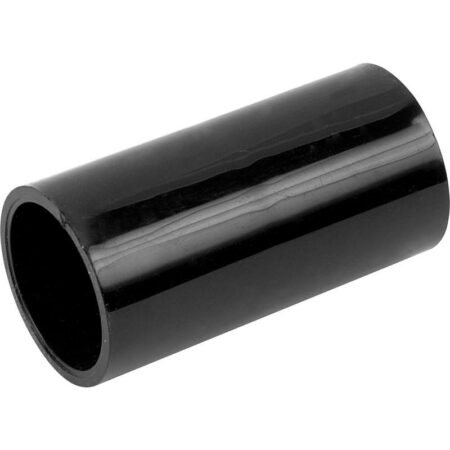
- Couplers: To join two lengths of pipe.
- Bends/Elbows: For navigating corners.
- Junction Boxes: Enclosures for wire connections and protection.
- Saddles/Clips: Used to mount and support the conduit on walls or ceilings.
- Bending Springs: Essential tools inserted into the pipe to allow manual bending without kinking.
PVC Conduits Pipes.
Installation Instruction.
Joints to fittings are made with slip-on solvent-welded connections, which set up rapidly after assembly and attain full strength in about one day.
Since slip-fit sections do not need to be rotated during assembly, the special union fittings used with threaded conduit are not required.
Since PVC conduit has a higher coefficient of thermal expansion than other types, it must be mounted to allow for expansion and contraction of each run.
Care should be taken when installing PVC underground in multiple or parallel run configurations due to the mutual heating effect of densely packed cables because the conduit will deform when heated.
| Size | 20mm HG, 25mm HG, 32mm HG, 50mm HG |
|---|
Be the first to review “PVC Conduits Pipes”
You must be logged in to post a review.
Related products
Electrical Fittings

Electrical Fittings
Electrical Fittings
Electrical Fittings
Reviews
There are no reviews yet.